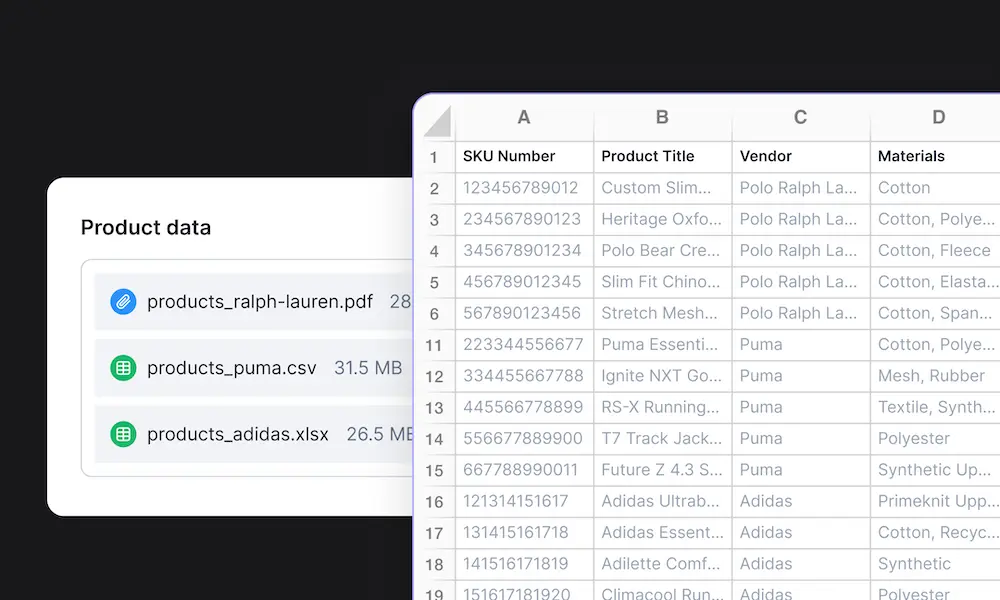








You work with a long list of suppliers, and each one sends product data in its own format, with its own field names, its own color and size conventions, and its own idea of what counts as complete. The gaps get filled by hand and the rest gets chased over email, while products sit in a backlog and the season moves on.
But clean data is not a finished listing. It still needs descriptions, complete attributes, and images before a product can go on sale.
One portal, from raw supplier data to catalog-ready


Get sellable listings, not just clean data

The portal runs on the same platform that enriches data and writes product content, so submissions move from intake to finished listing without leaving Hypotenuse.
The same submission becomes a finished listing: descriptions in your brand voice, filled-in attributes, and images edited to your channel specs.
Supplier images are matched to the right products automatically as they are uploaded.

Onboard suppliers faster
Suppliers submit in the format they already use, without reformatting their data to match your system first.
Mapping, normalization, and categorization run automatically as products arrive.
Review time stays flat as you add suppliers, because your team approves products in bulk.

Control what reaches your catalog
Suppliers submit; your team decides what goes live.
Every AI-suggested value stays editable, so your team always has the final say.
An audit trail traces every value back to the input it came from, including vendor data.
Use cases of our AI supplier data management


Frequently asked questions about AI supplier data management
Do we need a PIM as well?

The portal is the onboarding layer of Hypotenuse, which is itself a full AI-first PIM, so you do not need a separate one. If you already have a PIM you want to keep, the portal onboards and enriches the data that feeds it.
What formats can suppliers submit?
Suppliers submit in the format they already use. Hypotenuse maps it to your schema, so they are not asked to rebuild their data to your template before they can send it.
How do we stay in control of what vendors send us?
Vendors submit, and your team decides what goes live. AI-suggested values are clearly marked and remain editable before publishing.
Is our data secure?
Hypotenuse is SOC 2 Type II certified. Access is controlled by role across your teams, your vendors, and your agencies.
Can it handle a lot of suppliers at once?
Yes. The platform is built for bulk operations, and your team approves products in bulk, so adding suppliers doesn't add proportional review work.
What happens after a product is approved?
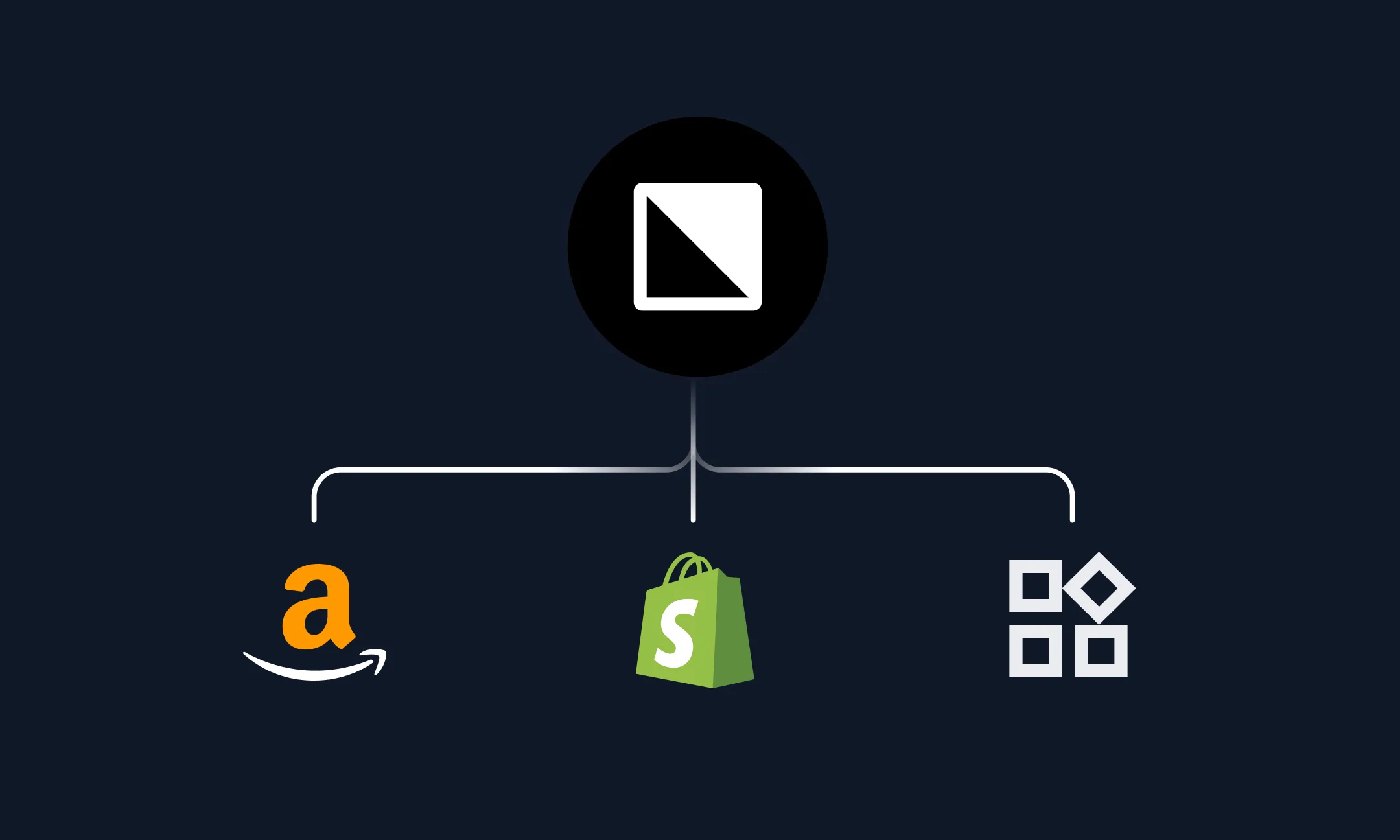
It flows into the workflows you choose: enrichment fills what is missing, content is generated to your brand guidelines, images are edited to your standards, and it publishes to your channels.